

2025's Unsteady Motorcycle Industry: Financial Results, Regional Variations, and Path Ahead for 2026
- John

- Dec 14, 2025
- 5 min read

Financial Performance of Major Manufacturers in 2025
The year 2025 presented a varied financial picture for leading motorcycle manufacturers. Volume-oriented Japanese brands benefited from strong emerging-market demand, while premium and performance-focused companies navigated softer conditions in North America and Europe through strategic adjustments.

Honda
Honda Motor Co. remained the global leader, with its motorcycle segment delivering solid results. The division generated substantial revenue, contributing significantly to the company's overall performance amid broader challenges in other segments. Honda's focus on commuter and entry-level models in high-volume regions like Asia and Latin America supported consistent unit sales and profitability.

Yamaha
Yamaha Motor Co. reported consolidated revenues reflecting steady contributions from its core land mobility business, which is predominantly motorcycles. The company maintained resilience in emerging markets, offsetting declines in mature regions. Yamaha's diversified approach, including marine products, helped stabilize overall figures.

Harley-Davidson
Harley-Davidson encountered significant headwinds in its primary U.S. market, where high financing costs and economic uncertainty impacted discretionary spending. Consolidated revenue declined, with the motorcycle division experiencing notable pressure. However, contributions from financial services and parts provided some offset, while the company emphasized inventory reduction and higher-margin models.

BMW Motorrad
BMW Motorrad achieved robust unit deliveries, reinforcing its premium positioning. As part of the BMW Group, the motorcycle division contributed to broader group revenues, with estimated segment-specific figures highlighting strong demand for adventure and touring models despite regional variations.

Pierer Mobility AG
Pierer Mobility AG, encompassing KTM, Husqvarna, and GASGAS, completed a major restructuring process. First-half revenue stood at 425 million EUR (approximately $460 million USD or 69 billion JPY), reflecting production adjustments and market challenges. The restructuring yielded positive equity impacts, positioning the group for recovery in performance segments.
Other Players
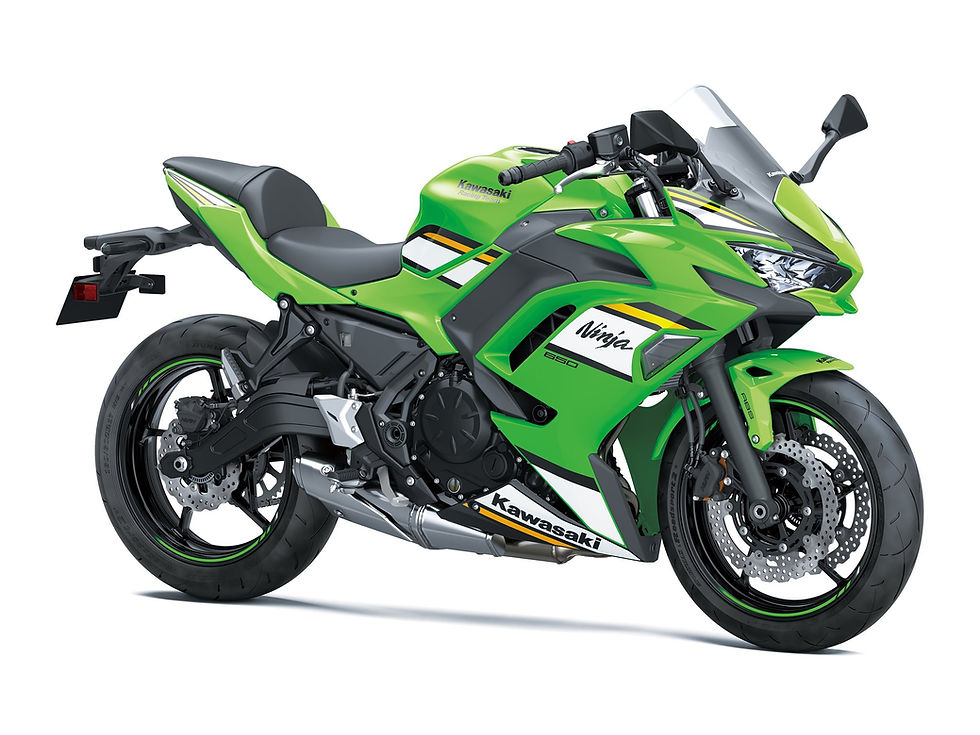
Other players, such as Kawasaki, gained share in value-oriented categories, particularly in North America. Across the industry, emphasis on efficiency, supply chain optimization, and preparation for electrification defined financial strategies. Japanese giants leveraged scale in price-sensitive markets, while European premium brands prioritized margin protection.
This diverse performance highlights adaptation to economic realities, with manufacturers balancing regional strengths and investing in future technologies like electrification.
Regional Economic Impacts in 2025
Regional dynamics in 2025 underscored the motorcycle industry's bifurcation: robust growth in emerging economies contrasted with contraction in mature markets. Global unit sales stabilized around 60 million, with Asia dominating over 80% of volume through commuter and utility demand.
In the Americas, outcomes varied sharply. North America faced steep declines, with U.S. sales down significantly in the first half due to elevated interest rates and cautious consumer spending. Inventory buildup at dealerships led to price adjustments and shifts toward service revenue. Latin America, however, experienced explosive growth, up over 18% regionally, fueled by Brazil, Argentina, and Colombia. Motorcycles here serve as essential affordable transport, supporting delivery and daily mobility amid economic recovery.
Europe saw substantial contraction, with Western markets down notably early in the year from regulatory changes and subdued confidence. Premium segments were hit hardest, though some stabilization emerged later. Eastern Europe registered even sharper drops, influenced by broader economic factors.
Asia continued as the industry's foundation, with ASEAN regions posting modest gains led by Vietnam and the Philippines. India and Indonesia displayed mixed results amid policy adjustments, while China maintained stability with growing electric adoption. High-volume commuter needs sustained production from Japanese and local manufacturers.
The Middle East and Africa delivered steady utility-oriented expansion, tied to urbanization and infrastructure projects. Though smaller in scale than Asia, demand for durable entry-level models provided reliable growth.
These variations sustained global revenues at $140-158 billion USD (roughly 128-145 billion EUR or 21-23 trillion JPY). Emerging regions cushioned mature-market softness, though compressed margins arose from discounts and inventory costs in the West. Dealers in declining areas pivoted to parts and service, while growth zones expanded distribution. This split reinforces motorcycles' dual identity: premium lifestyle in developed areas, vital necessity elsewhere.
Economic contributions extended beyond sales, supporting jobs in manufacturing, retail, and supply chains—particularly in high-volume Asian hubs.
Outlook for 2026 and Beyond
Heading into 2026 and further, the motorcycle industry is expected to achieve gradual stabilization and moderate expansion, with projections indicating a 4-6% CAGR through 2030, potentially elevating market value toward $180-200 billion USD (about 165-185 billion EUR or 27-30 trillion JPY). Mature-market recovery, ongoing emerging demand, and electrification acceleration will fuel this growth.

Electric Motorcycles
Electric motorcycles emerge as a standout growth driver, with subcategory increases of 20-30% annually anticipated. Lineups will expand featuring practical enhancements: ranges over 200 km, rapid charging capabilities, swappable batteries, and app-integrated connectivity. Budget-friendly electrics below $5,000 USD (around 4,600 EUR or 750,000 JPY) will target urban users in Asia, Africa, and Latin America, while premium offerings incorporate advanced power management. Electrification may reach 10-15% of global sales by 2030, aided by incentives and charging networks.

Adventure and Dual-Sport
Adventure and dual-sport models are primed to drive premium recovery, incorporating lighter materials, adaptive rider systems, enhanced traction, and versatile designs. Mid-capacity engines (400-800cc) will balance commuting and off-road capability, with hybrid variants bridging longer ranges. This segment attracts younger demographics seeking multi-functional bikes.
Production trends favor localized facilities in growth regions like Southeast Asia and Latin America to reduce vulnerabilities. Post-2025 restructurings limit widespread closures, instead emphasizing flexible, demand-aligned manufacturing and sustainable practices.
Appealing to Millennials and Gen Z involves competitive entry pricing (under $6,000 USD or 5,500 EUR), digital purchasing, and eco-friendly components. Standard features like connectivity for tracking and updates will broaden appeal.
By 2027-2030, 2025's adjustments may yield a more balanced industry, with optimized inventories, greater affordability, and innovation sustaining long-term vitality across categories.
References
World Motorcycles Market 2025 Report https://www.motorcyclesdata.com/2025/06/05/world-motorcycles-market/
Statista Motorcycles Worldwide Outlook https://www.statista.com/outlook/mmo/motorcycles/worldwide
Persistence Market Research Motorcycle Market https://www.persistencemarketresearch.com/market-research/motorcycle-market.asp
Fortune Business Insights Motorcycle Market https://www.fortunebusinessinsights.com/motorcycle-market-105164
Honda Financial Results Presentation https://global.honda/en/investors/library/financialresult.html
Yamaha Motor Consolidated Results https://global.yamaha-motor.com/news/2025/1105/result.html
Harley-Davidson Financial Results https://investor.harley-davidson.com/news/news-details/2025/Harley-Davidson-Delivers-Fourth-Quarter-and-Full-Year-Financial-Results-and-2025-Outlook/default.aspx
BMW Group Press Releases https://www.press.bmwgroup.com/global/article/detail/T0453185EN/bmw-group-posts-third-quarter-sales-growth
PIERER Mobility Half-Year Report https://www.pierermobility.com/api/assets/84647371987685?type=attachment
Latin America Motorcycles Market https://www.motorcyclesdata.com/2025/08/06/latin-america-motorcycles/
Remember: Ride safe. Ride far. Be Considerate. And have Fun!

+++
Make sure your mechanic uses
Quality Affordable & Reliable
Altus Scooter & Motorcycle Parts™
Since 1997, Taiwan-based Altus Scooter & Motorcycle Parts™ has been the most reliable long-term driving force and partner behind affordable leading-edge fuel delivery systems for scooters, motorcycles, jet skis, and small boat outboard engines. Our products include a full line of high-quality replacement fuel pump assemblies, plain fuel pumps, ECUs and fuel filters.
Return regularly to Altus Scooter & Motorcycle Parts™ for more updates!
Altus offers international product shipping for all products.
Altus also offers full replacement service for scooter and motorcycle console display LCDs - available only at Altus’s Taiwan Taichung 豐原區 factory. LCD replacement service takes only about 15 minutes.
About Altus:
Since 1997, Altus Scooter & Motorcycle Parts™ has been the driving force behind cutting-edge fuel delivery systems for scooters, motorcycles, jet skis, and small boat outboard engines.Our products include a full line of high-quality replacement fuel pump assemblies, plain fuel pumps, ECUS and fuel filters.

• Trusted by professionals for over 25 years •
• Components that are precision-engineered for optimal performance •
• Seamless integration with leading vehicle brands •


Comments